Spring - Richmond Formative Reading Assessment Data
What targeted actions did we take to address our school’s learning focus?
We took the information from our Fall Reading Assessment to guide Pro-D, teacher release time for planning, and resource purchases to support the targeted areas of need in our different grade groups. Staff was able to work in grade groups to plan the wrap around support that would be given to the students in their classes.
What gap or problem were these actions intended to address? Why was this particular strategy/action chosen?
The gap we were looking to address was to support not only our emerging students but to also move the students who fell into the developing range towards proficiency. Our Resource/ELL team was able to have targeted intervention for those in the emerging areas and our classroom teachers supported all learners in the classroom with focus on the developing level literacy stretches shown in the class Reading Assessment. This action was chosen as we are looking to strengthen support for all student to move into proficiency.
What does the evidence tell us so far?
We have continued to see an improvement in our emerging learners with targeted support from the Resource/ELL teachers and this year with clear and consistent school data collect, we can see the growth in students in the developing range across all grade levels.
Comprehension
Using the language from the 12 comprehension categories, we have been able to pinpoint areas of success and areas that are still stretches for our developing learners.
Areas of growth across grade groups include
- Predicting
- Questioning
- Making Connections to other learning in school.
The most common stretches across grade groups include
- Making Personal Connections
- Responding
- Inferencing.
Reflecting on our fall data on Decoding and Fluency we can see that we have had lot of success when we look specifically back at the Grade 1 & 3 decoding we highlighted in the fall:
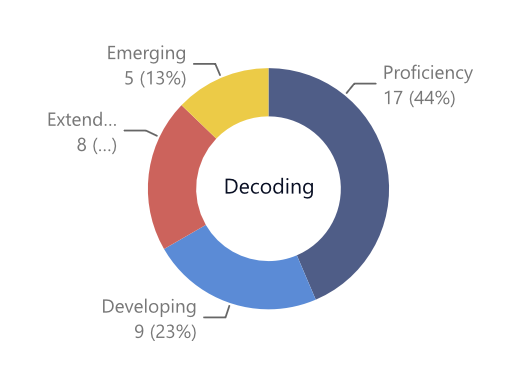
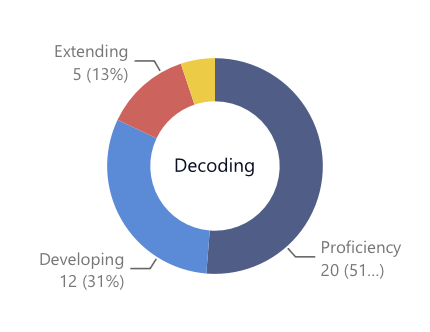
GRADE 1 GRADE 3
And also when we look at the whole school picture.
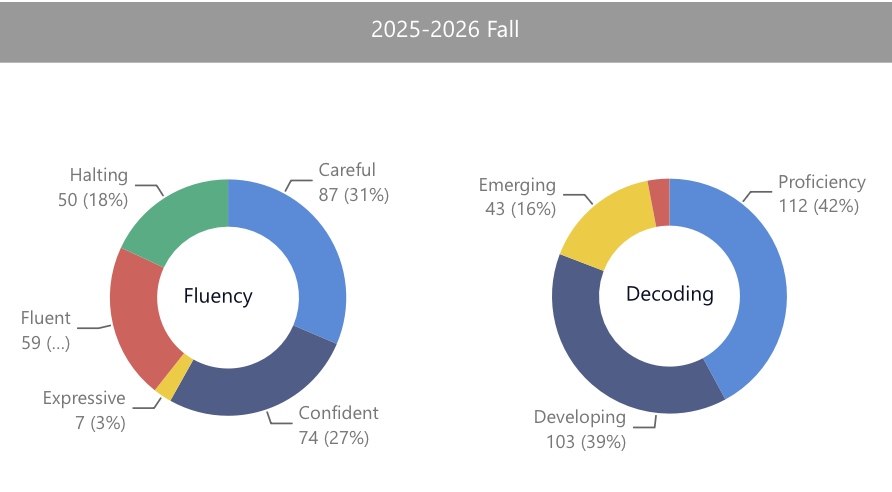
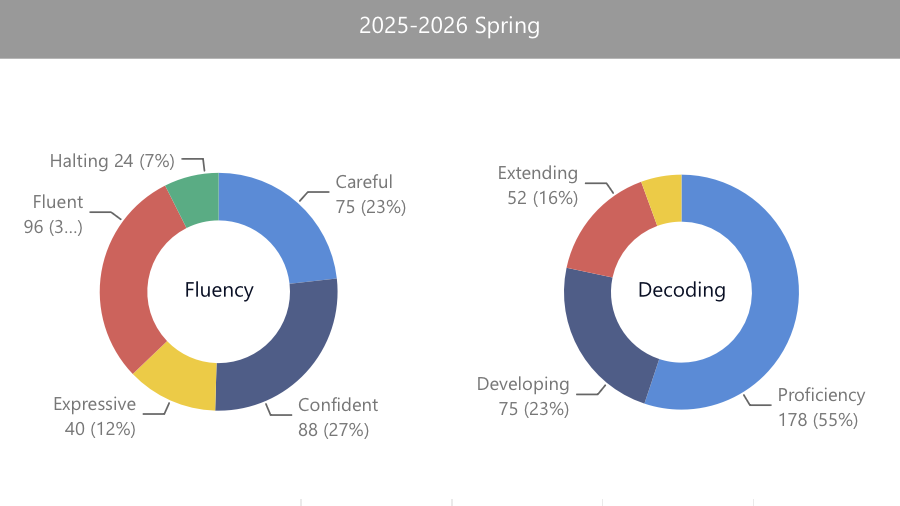
To what extent are the actions making a difference?
We have seen a noticeable difference in our clarity of instructional support and common language throughout grades using the Richmond Formative Reading Assessment (RFRA). Results from our Spring Assessment are not only shared with this year’s classroom teachers but will be shared by grade to the classroom teams of the incoming students. This will allow teachers to begin literacy planning earlier in the school year to meet the needs of the students in their class.
How will we move forward accordingly?
We will continue to use our RFRA to help guide planning, teaching, and supports in the classroom. Having this information has already helped us plan for professional development in the coming year. A practice we will strengthen is the sharing and reflection time. We have seen that when grade groups meet there is rich discussion about how to best meet the individual students and their literacy goals. Time to look at the data as teachers is important but a next step is to include the students, this can help them take ownership over their learning, celebrating their strengths and giving them specific goal areas for improvement throughout the year.
Updated:
Tuesday, June 16, 2026