Fall Richmond Formative Reading Assessment Data
What targeted actions did we take to address our school’s learning focus?
This fall all of our students took part in literacy assessments as a way to guide teacher planning and student support and learning for the coming year. Teachers used a variety of tools to access student understanding that linked to the specific learning goals in Fluency, Decoding, and Comprehension. All of the findings were collected and shared so we could get a good picture of class, grade group, and school successes and stretches.
What gap or problem do these actions aim to address? Why was this particular strategy/action chosen?
A gap we were noticing was not having common language throughout the grades to see, discuss and explore specific areas in literacy development that may be stretches or strengths for particular children or a particular age group. By using our district created Richmond Formative Reading Assessment (RFRA) class profile assessment sheet, we were able to have a standardized measure that was both consistent across grade group and progressive in the developing literacy goals throughout the grades. This allowed us to be able to make observations and gain insights within classes and across the school as a whole with common language and clear expectations of specific areas of literacy development.
Based on quantitative and qualitative data (including feedback from scanning), how effectively has this strategy addressed the identified gap or problem?
Qualitatively, having a common measure of literacy goals and district created tools that teachers could use to collect the data allowed for lots of thoughtful and meaningful conversations about literacy learning and our assessment practices for literacy.
These conversations happened one-on-one, in grade groups, and across the school community.
As a teaching staff, learning how to best assess literacy learning has generated more collective planning, sharing of resources, and collaborative approaches to meeting kids where their needs are.
Quantitatively, we have noticed these trends:
- Fluency
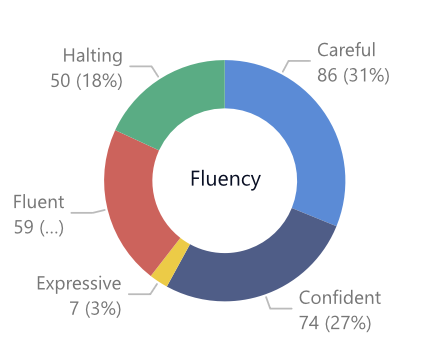
As a whole school about half of our students are fluent, confident, and expressive in their reading. This trend is fairly consistent throughout the grade groups with slight increases as students move to the upper intermediate grades.
- Decoding
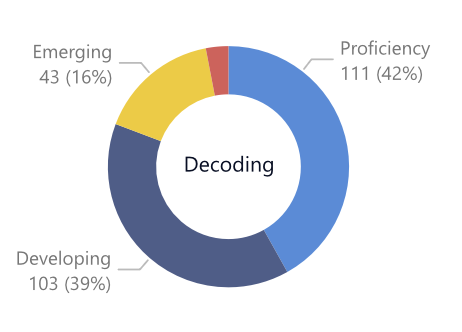
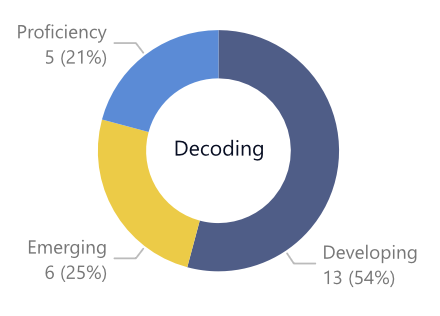
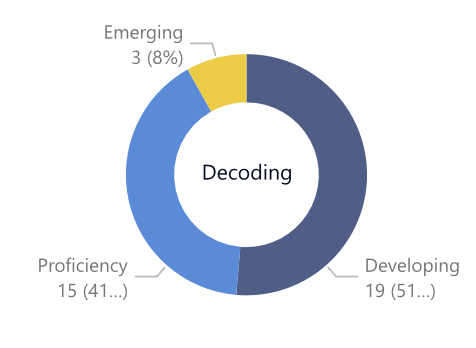
Decoding is an area of great attention in our primary grades, so it came as no surprise that as a whole school we would have a large number of students still in the developing and emerging stages. If we compare Grade 1 to Grade 3 we can already see how the strong literacy practices of our teachers make a big difference building decoding skills for our students.
Grade 1 Grade 3
Comprehension
Comprehension is assessed through the RFRA using 12 different categories.
- Retelling and summarizing,
- responding to text
- predicting
- making connections
- making personal connections
- inferencing
- questioning
- making predictions
- identifying and using text features
- identifying main
- ideas and details
- responding
- identifying purpose
This helps give a fuller picture of comprehension as well are specific areas that can use more support. The areas we noticed needed more focused attention from K-7 are: questioning, identifying and using text features, and responding to text.
How will we move forward accordingly? What adjustments do we need to make if we have or have not achieved our goals?
Moving forward we are continuing to meet, connect, and discuss the literacy practices in our classroom. Teacher reflection on the developing needs of the classroom is helping guide support plans which include resources, collaboration time, and in differentiated instruction.
We are also interested to see the results of our Spring RFRA class assessments to notice areas of grow and/or continued areas that need support moving forward. Having this information will help guide planning for future Professional Development to support the ongoing literacy work done by the staff with their students.
Updated:
Friday, March 13, 2026